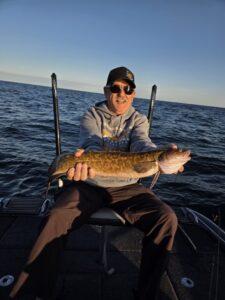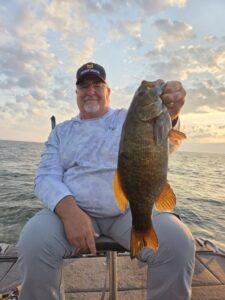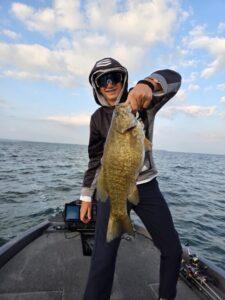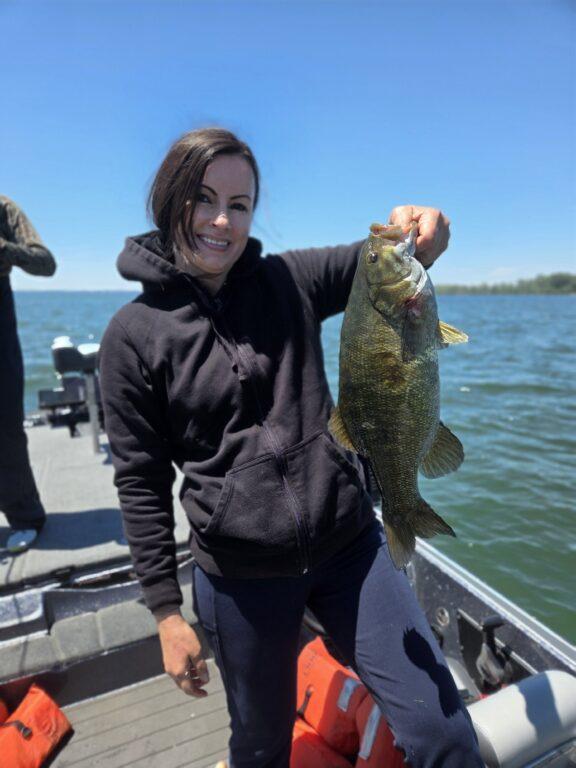
It’s hot. Like, step outside and immediately start sweating hot. After a relatively cool spring and June around Erie, summer has officially arrived.
July through early October is what I consider our true summer season on Lake Erie. Every year is a little different, but I generally break it into three phases: Early Summer, the Dog Days, and the Transition into fall.
Fish don’t read calendars, but seasonal trends can give you a really good starting point. Hopefully this helps you understand what to expect over the next few months and ultimately catch more bass and walleye around Erie, PA.
Early Summer
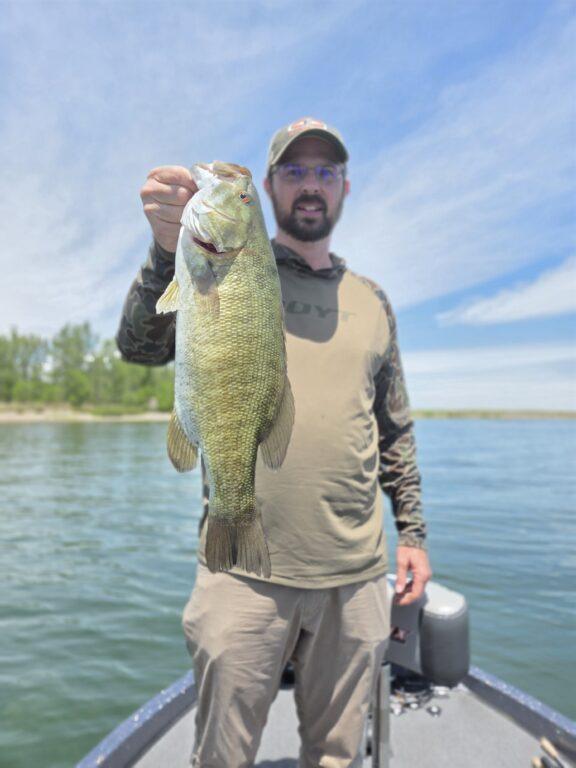
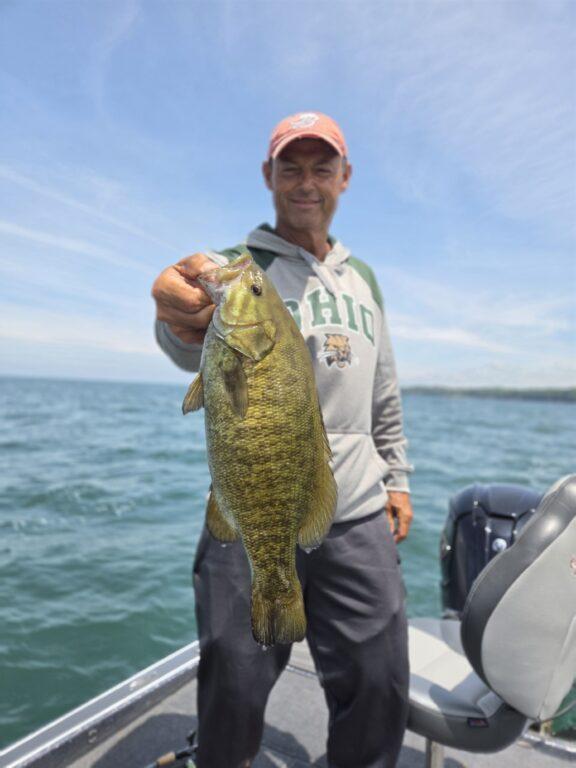
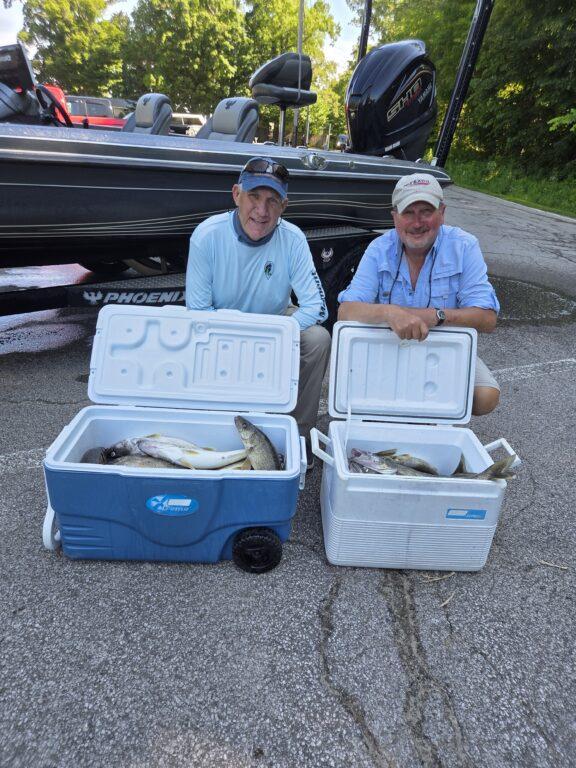
Early summer is honestly one of my favorite periods of the year. Things are still changing, but overall, summer patterns are becoming more established as both bass and walleye move farther away from the spawn and start feeding heavily again.
Walleye
The walleye bite is usually really solid during this period. Whether you’re trolling or casting for Lake Erie walleye (we only cast and jig on our trips), fish are generally aggressive and looking to put weight back on.
The end of the mayfly hatch plays into that, but there are plenty of other groceries available too. Gobies, emerald shiners (which a lot of our fish have been spitting up lately), alewives, and other forage all give these fish plenty to eat.
One thing I hear a lot this time of year is, “The walleye are all deep now.”
Not necessarily.
We catch plenty of fish shallower than what people traditionally think of as summer walleye water. Wind, bait movement, current, and water temperatures can all reposition fish. That said, many of the larger schools I target are generally in that 50 to 75 foot range during early summer. As the lake continues warming, many schools become more consistent in 70 to 100+ feet, although there are almost always exceptions.
Most of my fishing this time of year revolves around jigheads with plastics and reaction baits like glide baits built for walleye. I love covering water and making fish react.
Bass
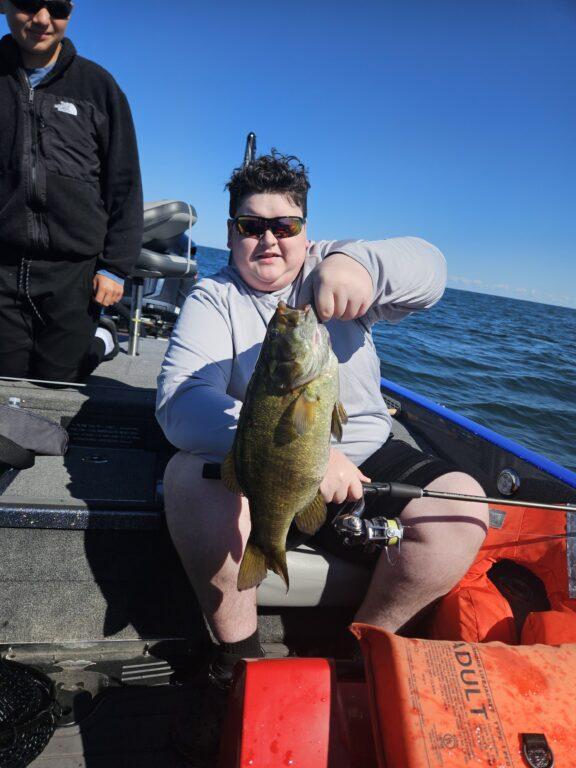
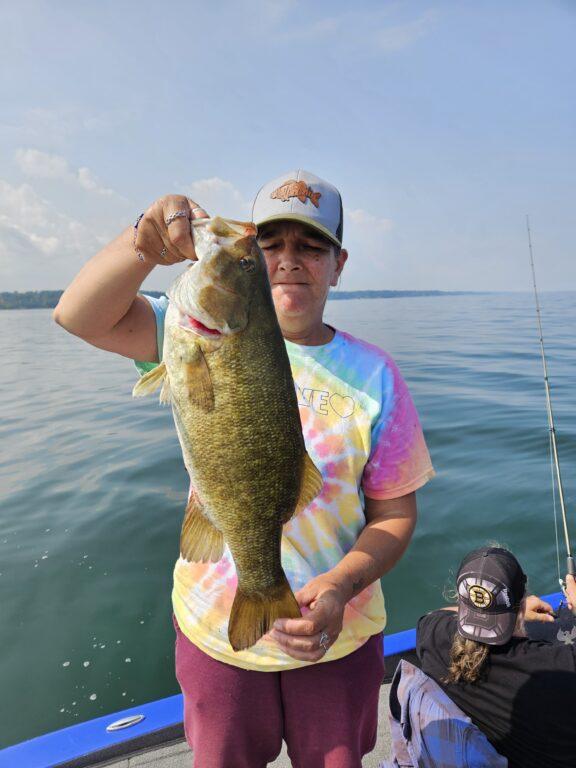
Summer Lake Erie smallmouth bass are beginning to settle into their true postspawn patterns. Most have been done spawning for several weeks and are ready to eat.
Main lake humps, ridges, hard bottom transitions, and isolated structure all become key players. The challenge is that Lake Erie is full of places that look good. The bass usually choose only a small percentage of them.
This is where I spend a lot of my time.
Honestly, I’m behind the wheel more than I have a rod in my hand. I’ll graph an area with Side Imaging, traditional sonar, mapping, and Forward Facing Sonar before ever making a cast. It can be tedious. It can also be the difference between catching five fish and twenty-five.
If you’re looking to become more efficient with your electronics, that’s something I really enjoy teaching on guide trips. I want clients to leave understanding why fish were there, not just where we caught them.
You’ll also notice drum and walleye mixed in with bass on a lot of these offshore structures.
Whenever you catch one, slow down and ask yourself a few questions.
Why was that fish there?
What made this area different?
Was there more bait? Different bottom? A harder edge? More current?
Those little clues often separate one productive area from twenty average-looking ones.
Bass can still be relatively shallow during early summer, but as water temperatures continue climbing, many begin pushing deeper looking for more stable conditions.
Typical depth range: 5 to 45 feet
The Dog Days of Summer
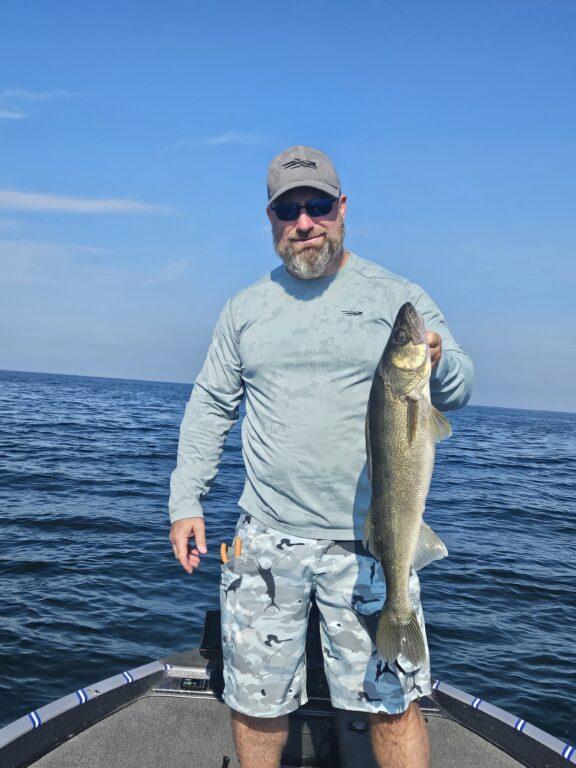
This is where consistency becomes just as important as finding fish.
As the thermocline develops, many baitfish and gamefish begin relating to it in one way or another. Some suspend high over deep water while others stay closer to bottom where oxygen levels and forage remain favorable.
Wind becomes a much bigger factor this time of year too. It can reposition bait, change water temperatures, and completely change how active fish are from one day to the next.
Walleye
Many schools spend time around the thermocline, whether they’re suspended over deep water or positioned near bottom in roughly 50 to 60 feet where it commonly sets up around Erie.
Fishing can still be excellent during this period, but I’ve found bite windows become much more important.
Pay attention to where the bait is. Pay attention to your electronics. Look at the overall biomass, not just individual fish.
You’ll often run into plenty of sheepshead. The more time you spend watching how different species group and move on your electronics, the better you’ll become at staying around walleye instead of catching drum all day.
The same presentations continue catching fish, but tipping a jig with a crawler or adding scent can often make a noticeable difference when fish get a little pickier.
Bass
Bass follow many of the same seasonal trends.
As the thermocline becomes well established, many fish position deeper. Big wind events can temporarily change everything though. Water temperatures shift. Bait moves. Bass move with them.
One of the biggest advantages you can give yourself is paying attention to the weather before you ever launch the boat.
Most days, finesse techniques are still king. But weather changes can create some outstanding power fishing opportunities too.
Again, those feeding windows become increasingly important.
Some days they’ll make you look like you know exactly what you’re doing.
Other days they’ll humble you in a hurry.
That’s fishing.
Typical depth range: 15 to 55 feet
The Late Summer Transition
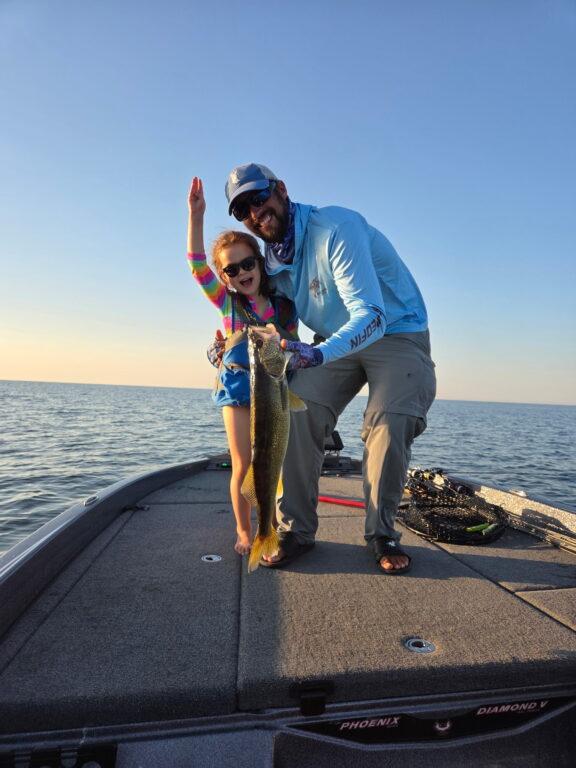
Late summer has a personality all its own.
The days get a little shorter. Nights start cooling off. Wind becomes more consistent. Water temperatures begin changing, and the thermocline slowly starts breaking down.
Fish start moving.
Schools that were incredibly predictable a few weeks earlier can suddenly become much harder to stay with. Bait is moving, and both bass and walleye are following it.
Walleye
I’ve had some incredible days casting and jigging giant walleye off “the mountain” during late September and even early October.
This is a period where paying attention matters more than ever. Yesterday’s waypoints may still have fish, or they may be empty.
Many of the same presentations continue working, while blade baits and bucktails can really shine during certain windows.
It’s also the beginning of one of my favorite times of the year because you know that tremendous fall fishing isn’t far away.
Bass
Bass are doing much of the same thing.
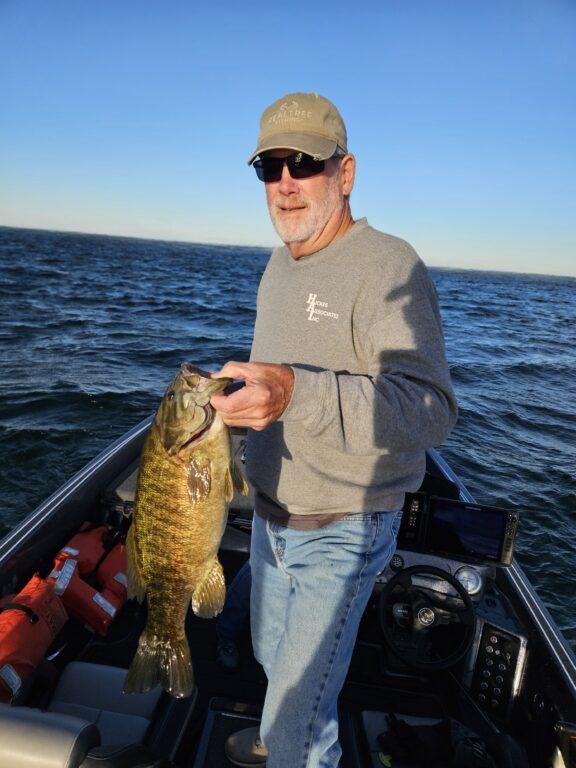
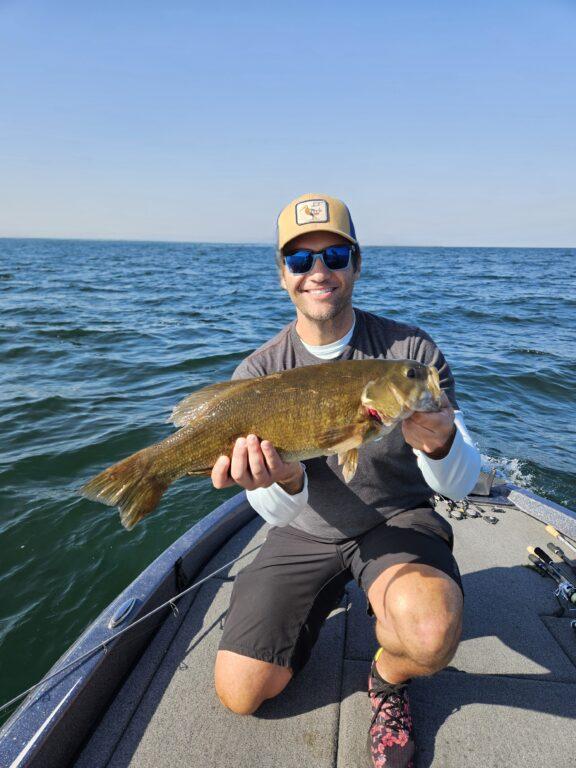
Sometimes moving bait pulls giant smallmouth into areas that are much easier to target than the seemingly endless offshore basin. Other times they’re incredibly deep.
We’ve had 25+ pound bags during this period, and I’ve had days that left me scratching my head a bit.
That’s transition.
Try to find more stable areas that aren’t changing quite as quickly, but don’t overlook shallow fish either. As we move closer to fall, power fishing techniques usually become a bigger part of the equation again.
Typical depth range: 2 to 70 feet (I know… not exactly narrowing it down, but that’s honestly how dynamic this period can be.)
Final Thoughts
Every summer is different, but understanding these seasonal trends gives you a much better place to start than simply picking a waypoint and hoping.
Stay flexible. Watch the conditions. Let the fish tell you what they’re doing that day.
We’ve been spending plenty of time chasing bass, casting for Lake Erie walleye, and helping anglers get more comfortable with their electronics along the way. It’s been a fun start to the summer, and I’m excited to see what the rest of the season has in store, including fishing a tournament or two myself.
Summer is honestly one of my favorite times to be on Lake Erie. The fish can sometimes challenge you, but when everything comes together, there aren’t many places I’d rather be.
Whether you’re looking to catch more bass, learn how to consistently cast for walleye, or become more confident with your electronics, I’d love to spend a day on the water with you.
Tight lines,
Captain Destin DeMarion
724-790-4232 (4BFB)
Big Fat Bass Guide Service
DestinDeMarion.com
Gear Discounts for Clients & Blog Readers:
Doc’s Tackle: Contact me directly for exclusive discounts on rods, reels, and terminal tackle.
Douglas Rods: Ask me about deep discounts on any rod in the lineup.
Angler Tungsten: Use code “DD20” at AnglerTungstenCo.com
ShredFin Apparel: Use code “DEMARION15” at ShredFin.com
Amphibia Eyewear: 20% off with code “Destin” at amphibiaeyegear.com
Lake Erie Summer Fishing FAQs
Where are Lake Erie walleye during the summer around Erie, PA?
Summer walleye around Erie can be anywhere from 20 feet to well over 100 feet depending on water temperature, forage, wind, and current. While many schools become more consistent in 70 to 100+ feet later in the summer, don’t overlook shallower fish when bait is present.
What are the best baits for casting for Lake Erie walleye in Erie, PA?
Jigheads paired with soft plastics, glide baits, blade baits, bucktails, and crawler presentations all have their time. Matching your presentation to fish mood, forage, and location is often more important than tying on one “magic” bait.
Where do Lake Erie smallmouth bass go after the spawn around Erie, PA?
Most transition toward offshore humps, ridges, hard-bottom transitions, and isolated structure. The best areas usually have subtle differences that separate them from dozens of similar-looking spots nearby, which is why time behind the electronics is so valuable.
How important are electronics for summer fishing on Lake Erie near Erie, PA?
They’re one of the biggest advantages an angler can have. Side Imaging, traditional sonar, Forward Facing Sonar, and quality mapping help eliminate unproductive water, find bait, and identify the small percentage of structure that consistently holds fish. Just as important as owning the technology is learning how to interpret what it’s showing you. That’s a skill that pays dividends every time you launch your boat.